
A Storm in a Teacup: Meaning, Examples, Usage, Origin, and Quiz
A lot of anger or worry about something unimportant.
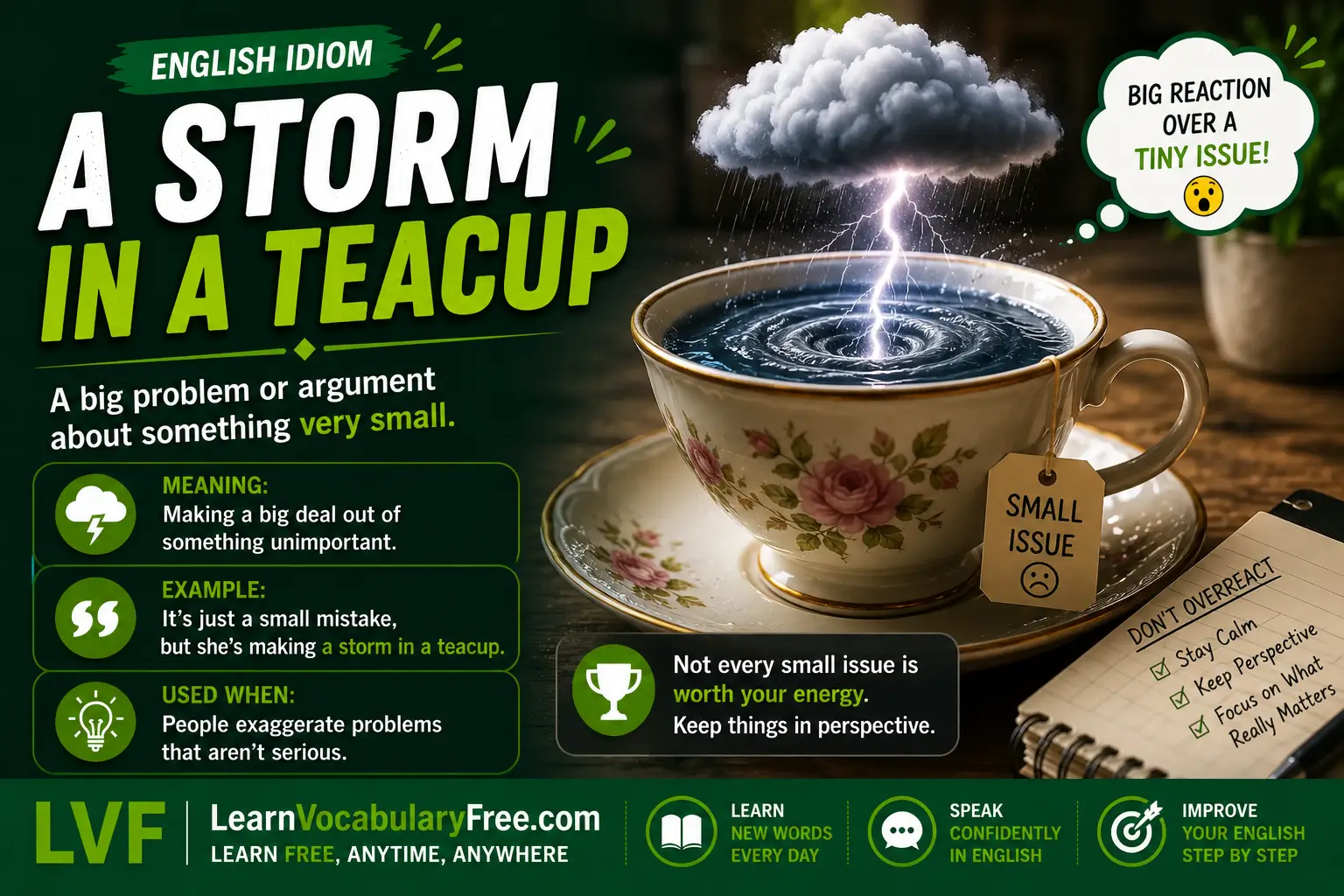
Quick Meaning of “A Storm in a Teacup”
A storm in a teacup means a lot of anger, worry, or excitement about something small or unimportant.
Example: Their argument was just a storm in a teacup.
What Does “A Storm in a Teacup” Mean?
The idiom “a storm in a teacup” is used when people react strongly to a small problem, minor disagreement, or unimportant situation.
In simple terms, if a situation creates too much drama, worry, or anger compared to its real importance, you can call it “a storm in a teacup.”
Meaning in Real Usage
In real English usage, “a storm in a teacup” often appears in conversations about small arguments, office drama, social media reactions, minor mistakes, misunderstandings, and problems that become exaggerated.
Examples of “A Storm in a Teacup” in Sentences
Their argument was just a storm in a teacup.
The office complaint became a storm in a teacup because the issue was solved within minutes.
The online debate looked serious at first, but it was only a storm in a teacup over a harmless comment.
Is This Idiom Formal or Informal?
“A storm in a teacup” is a neutral and commonly used idiom. It can be used in everyday conversation, storytelling, opinion writing, workplace discussion, and semi-formal contexts.
Real-Life Scenario
Two classmates argue because one of them forgot to return a pen. Everyone becomes worried, but the issue is solved quickly. The teacher says, “This was just a storm in a teacup,” meaning the reaction was bigger than the problem.
How to Use This Idiom Naturally
Use “a storm in a teacup” when people make a small issue seem much bigger, more serious, or more dramatic than it really is.
It works especially well when you want to describe overreaction, unnecessary drama, or exaggerated concern.
Why Not Just Say “Overreaction”?
Saying something is “a storm in a teacup” is more visual and expressive than simply saying “overreaction.” It creates the image of a big storm inside a tiny teacup, showing that the reaction is too large for the actual problem.
Common Mistake with “A Storm in a Teacup”
Do not use this idiom for a truly serious problem. A storm in a teacup should describe a small issue that gets too much anger, worry, attention, or drama.
Similar Idioms to “A Storm in a Teacup”
These related idioms and expressions describe overreaction, exaggeration, unnecessary drama, or making small problems seem bigger.
Opposite Expressions
Opposite expressions include: “a serious issue”, “a real problem”, “a major concern”, and “a big deal”, which describe problems that truly deserve attention.
Origin of the Idiom “A Storm in a Teacup”
Did you know?
The expression “a storm in a teacup” uses a humorous image: a large storm inside a tiny cup. The contrast between the storm and the small teacup helps explain the idea of exaggerated reaction.
Over time, the phrase became a common English idiom for unnecessary anger, worry, or drama over something small.
Frequently Asked Questions About “A Storm in a Teacup”
What does “a storm in a teacup” mean?
It means a lot of anger, worry, attention, or drama about something small or unimportant.
Is “a storm in a teacup” positive or negative?
It is usually negative because it suggests that people are overreacting to a small issue.
Can I use “a storm in a teacup” in writing?
Yes. It can be used in stories, opinion writing, workplace examples, social commentary, and everyday English.
Quick Practice: Test Your Understanding of “A Storm in a Teacup”
Test your understanding of the idiom “a storm in a teacup” with these quick questions. These practice questions will help reinforce the meaning, usage, context, and common mistakes of this English idiom.
Question 1 - Meaning: What does “a storm in a teacup” mean?
Question 2 - Sentence Usage: Which sentence uses “a storm in a teacup” correctly?
Question 3 - Context: When can you use this idiom?
Question 4 - Similar Idiom: Which idiom has a similar meaning?
Question 5 - Common Mistake: What should you remember about this idiom?
Key Takeaways
- “A storm in a teacup” means overreaction to something small or unimportant.
- It is useful for describing unnecessary drama, worry, or anger.
- It should not be used for truly serious problems.
- It is similar to “make a mountain out of a molehill.”
Final Learning Note
“A storm in a teacup” is a useful idiom for describing overreaction. Learn it when you want to explain that a small issue has received too much anger, worry, attention, or drama.