
Apple Doesn’t Fall Far from the Tree: Meaning, Examples, Usage, Origin, and Quiz
Children usually resemble their parents in behavior or character.
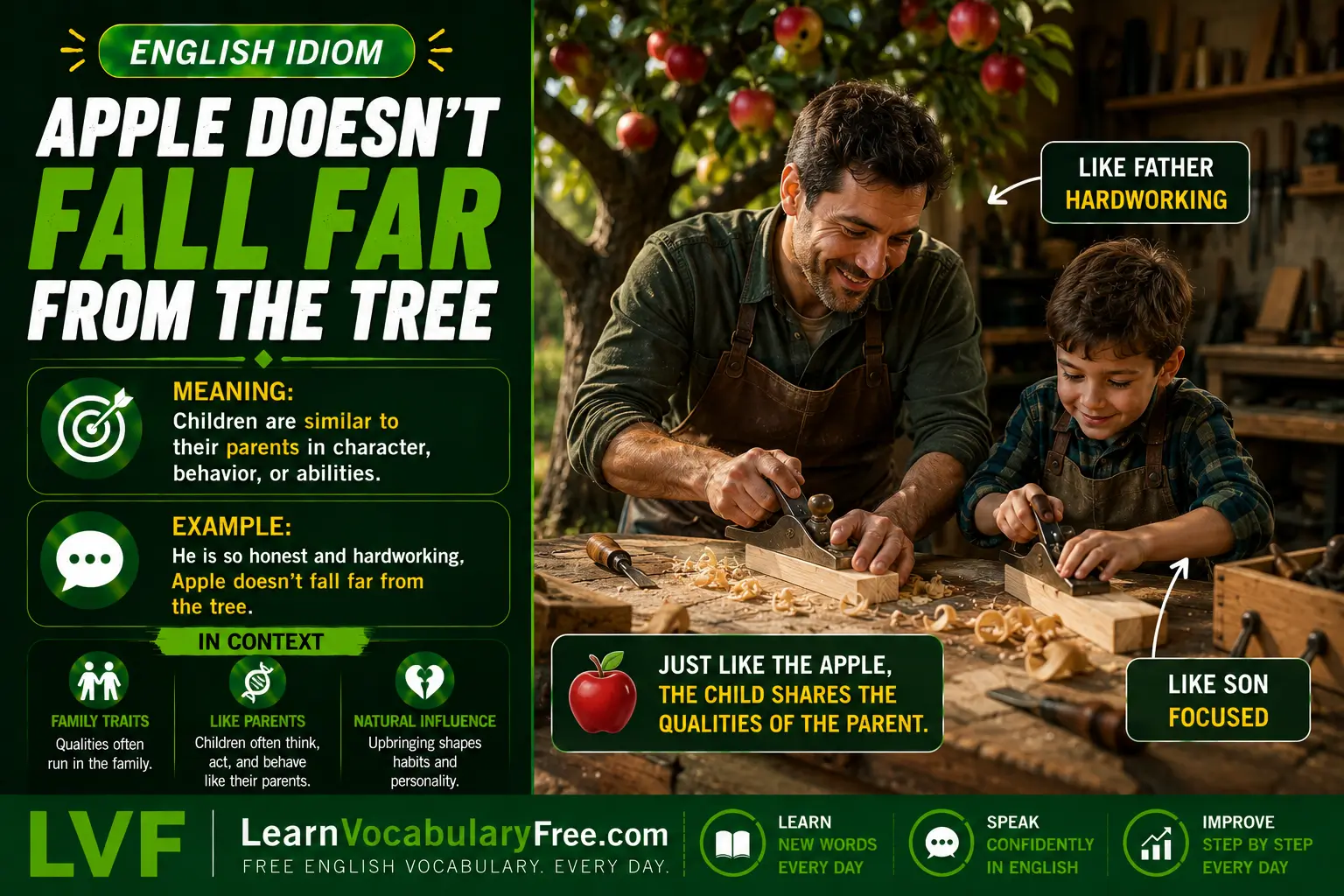
Quick Meaning of “Apple Doesn’t Fall Far from the Tree”
Apple doesn’t fall far from the tree means children often resemble their parents in behavior, personality, talent, or character.
Example: He loves music just like his father — the apple doesn’t fall far from the tree.
What Does “Apple Doesn’t Fall Far from the Tree” Mean?
The idiom “apple doesn’t fall far from the tree” means that children often resemble their parents in personality, behavior, habits, talents, values, or character.
In simple terms, if a child behaves like a parent or has similar qualities, people may say “the apple doesn’t fall far from the tree.”
Meaning in Real Usage
In real English usage, “apple doesn’t fall far from the tree” is commonly used when comparing children with parents in family conversations, storytelling, personality descriptions, talent, habits, behavior, and character.
Examples of “Apple Doesn’t Fall Far from the Tree” in Sentences
She is kind like her mother; the apple doesn’t fall far from the tree.
He loves music just like his father — the apple doesn’t fall far from the tree.
Her leadership style is very similar to her father’s, proving that the apple doesn’t fall far from the tree.
Is This Idiom Formal or Informal?
“Apple doesn’t fall far from the tree” is a neutral and commonly used idiom. It works well in everyday conversation, family discussion, storytelling, personal writing, and semi-formal contexts.
Real-Life Scenario
A young girl enjoys painting, just like her mother who is an artist. When relatives see her artwork, they say, “The apple doesn’t fall far from the tree,” meaning she has inherited a similar talent or interest.
How to Use This Idiom Naturally
Use “apple doesn’t fall far from the tree” when a child behaves like a parent or shows similar personality, habits, talents, interests, or values.
It can be used positively, neutrally, or sometimes negatively depending on the behavior being discussed.
Why Not Just Say “Children Resemble Parents”?
Saying “apple doesn’t fall far from the tree” is more natural and expressive than simply saying “children resemble parents.” It creates a clear visual image of similarity between a parent and a child.
Common Mistake with “Apple Doesn’t Fall Far from the Tree”
Do not understand this idiom literally as only talking about apples or trees. It is mainly used to describe similarity between children and parents.
Similar Idioms to “Apple Doesn’t Fall Far from the Tree”
These related idioms and expressions describe family similarity, inherited traits, shared behavior, or resemblance.
Opposite Expressions
Opposite ideas include: “completely different from the parents”, “nothing like the family”, and “break the family pattern”, which describe someone who does not resemble their parents or family background.
Origin of the Idiom “Apple Doesn’t Fall Far from the Tree”
Did you know?
The idiom “apple doesn’t fall far from the tree” comes from the simple image of an apple falling near the tree it grows from. This image suggests closeness, connection, and similarity.
Over time, the phrase became a common English idiom for describing how children often resemble their parents in behavior, character, interests, or abilities.
Frequently Asked Questions About “Apple Doesn’t Fall Far from the Tree”
What does “apple doesn’t fall far from the tree” mean?
It means children often resemble their parents in behavior, character, personality, or talent.
Is “apple doesn’t fall far from the tree” positive or negative?
It can be positive, neutral, or negative depending on the behavior or quality being compared.
Can I use this idiom for personality?
Yes. It is commonly used to describe similarities in personality, habits, interests, talents, or behavior between parents and children.
Quick Practice: Test Your Understanding of “Apple Doesn’t Fall Far from the Tree”
Test your understanding of the idiom “apple doesn’t fall far from the tree” with these quick questions. These practice questions will help reinforce the meaning, usage, context, and common mistakes of this English idiom.
Question 1 - Meaning: What does “apple doesn’t fall far from the tree” mean?
Question 2 - Sentence Usage: Which sentence uses this idiom correctly?
Question 3 - Context: When is this idiom commonly used?
Question 4 - Similar Expression: Which expression is most closely related?
Question 5 - Common Usage: What should you remember about this idiom?
Key Takeaways
- “Apple doesn’t fall far from the tree” means children often resemble their parents.
- It can describe behavior, personality, habits, talents, interests, or character.
- It can be positive, neutral, or negative depending on context.
- It is similar to “a chip off the old block” and “runs in the family.”
Final Learning Note
“Apple doesn’t fall far from the tree” is a useful beginner-friendly family idiom for describing similarity between parents and children. Learn it when you want to talk about family traits, shared behavior, inherited talents, or personality resemblance in natural English.